
Living alone brings independence and freedom. But when no one shares your home day to day, a few simple habits can help you better prepare for the unexpected.
Safety isn't only about equipment or technology. It also starts with good habits, trusted contacts, and paying some attention to your surroundings.
1. Keep Your Important Contacts Close at Hand
If something goes wrong, it helps to know quickly who to call. Keep the contact details of a few trusted people, along with the emergency numbers for your country.
A small notebook or a list saved in your phone can be enough. What matters is being able to find this information easily when you need it.
2. Let Someone Know When It Makes Sense
If you're going on a hike, taking a long trip, or planning an unusual activity, letting someone know can be a simple precaution.
It's not about reporting every move you make, but simply allowing someone to know you're okay or that you've arrived safely when the situation calls for it.
3. Check Your Home Regularly
Regularly checking your home's equipment can help you spot some problems before they become more serious.
Detectors, electrical installations, cooking appliances, locks and lighting all deserve regular attention.
A few minutes can sometimes be enough to spot a problem that might otherwise have gone unnoticed.
4. Avoid Foreseeable Risky Situations
A few habits can reduce some everyday risks: never leave a cooking appliance unattended, keep walkways clear, and replace faulty equipment instead of continuing to use it.
Prevention often comes down to simple actions repeated regularly.
5. Have a Backup Plan If Your Phone Isn't Available
A dead or unreachable phone can complicate an unexpected situation.
Keeping a charger within easy reach and, where relevant, a backup solution can be useful.
It's also a good idea to know important numbers by heart rather than relying only on your contact list.
6. Get to Know Your Surroundings
Knowing where the exits, pharmacies, emergency services, or people who could help are located can save time when things don't go as planned.
This knowledge is especially useful when you've just moved into a new home or a new city.
7. Don't Ignore Small Changes
Sometimes an unusual situation simply deserves to be taken into account.
A door that doesn't close properly, an appliance that behaves abnormally, or an installation that seems faulty are all signs better not ignored.
Prevention also means not waiting for a small problem to become a big one.
8. Stay in Regular Contact with a Loved One
When you live alone, regular contact with a trusted person can provide a simple point of reference in your day.
A call, a message, or a simple sign of life can be enough to maintain that bond.
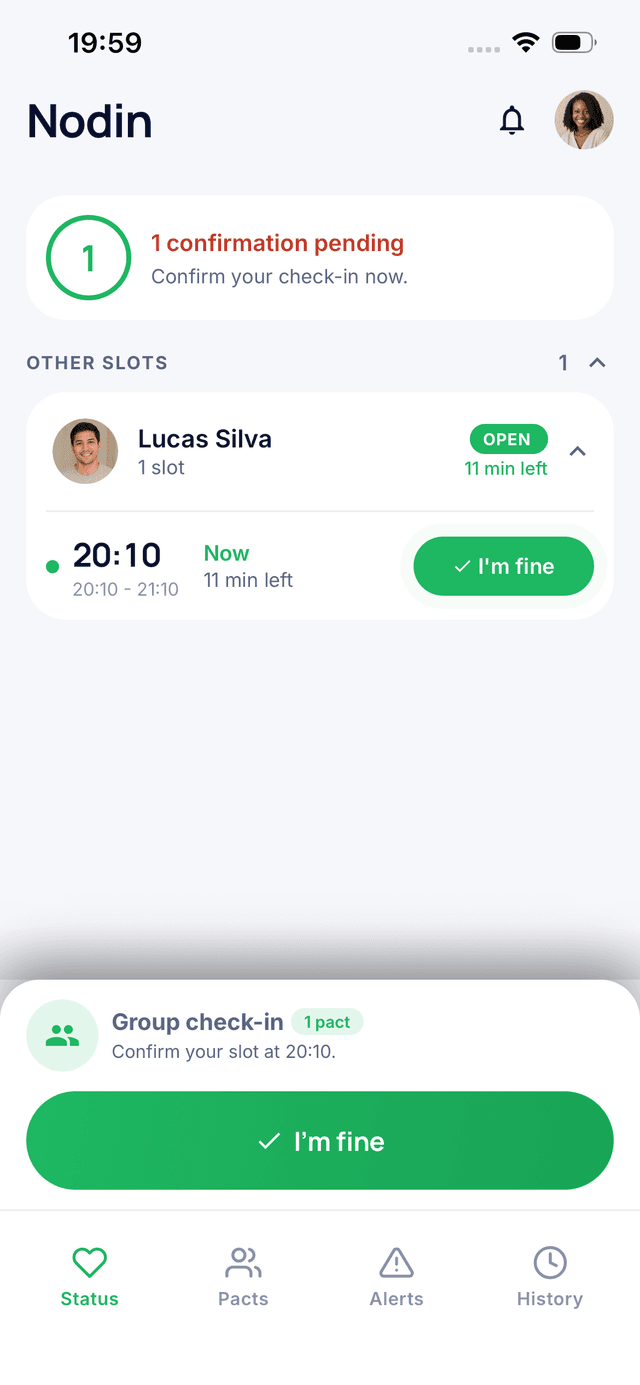
This is exactly the idea behind the Nodin app: allowing two trusted people to regularly share a sign of life, without turning that care into surveillance.
9. Decide in Advance What to Do If Something Goes Wrong
In a stressful situation, it's harder to think clearly.
Knowing ahead of time who to contact and what first steps to take helps you be better prepared.
It can be as simple as knowing which loved one to call, where to find your important documents, or which numbers to use in an emergency.
10. Find the Right Balance Between Independence and Prevention
Protecting yourself doesn't mean living in fear.
The goal is rather to put a few simple habits in place that let you enjoy everyday life with greater peace of mind.
Living alone can go perfectly well with good preparation and a network of trusted people.
Prevention Starts with Small Habits
You don't need to anticipate everything to be better prepared.
A few simple habits, trusted contacts, and regular attention to your surroundings can already make a difference.
Living alone means being independent. But independence doesn't stop you from staying connected to the people who matter.
With Nodin, a simple sign of life can become a small daily ritual between loved ones, keeping you connected while respecting everyone's independence.
Stay connected with the people who matter
Nodin is a free app that lets two trusted people share a simple sign of life every day. One tap to say you are okay, and if someone goes silent, the other is notified.