
Falls are one of the most common accidents at home, especially as we get older. According to the CDC, about one in four adults 65 and older falls each year. When you live alone, the real danger is often less the fall itself than the time spent on the floor before anyone realizes something is wrong. Here's what to do.
This article offers general guidance and is not a substitute for advice from a healthcare professional.
If You Fall: What to Do
- Don't rush to get up. Stay still for a moment and breathe calmly.
- Check yourself: does anything hurt? Can you move your arms and legs?
- If you're injured or can't move, don't force it. Call 911, or try to get attention (a phone, a neighbor, knocking on the wall).
- If you can move, roll onto your side, get on your hands and knees, crawl to a sturdy chair, and slowly push yourself up using it for support.
- Sit down and rest before doing anything else, then let someone know what happened.
If You Can't Get Up
- Keep your phone on you at all times, even at home (pocket, pouch, lanyard).
- Cover yourself with anything within reach to stay warm.
- Shift position regularly if you can.
- Make noise to alert neighbors.
Shorten the Time Before Help Arrives
This is what matters most. The sooner someone realizes something is wrong, the better. A daily check-in ritual is a simple solution: if you don't check in at your usual time, your loved one notices.
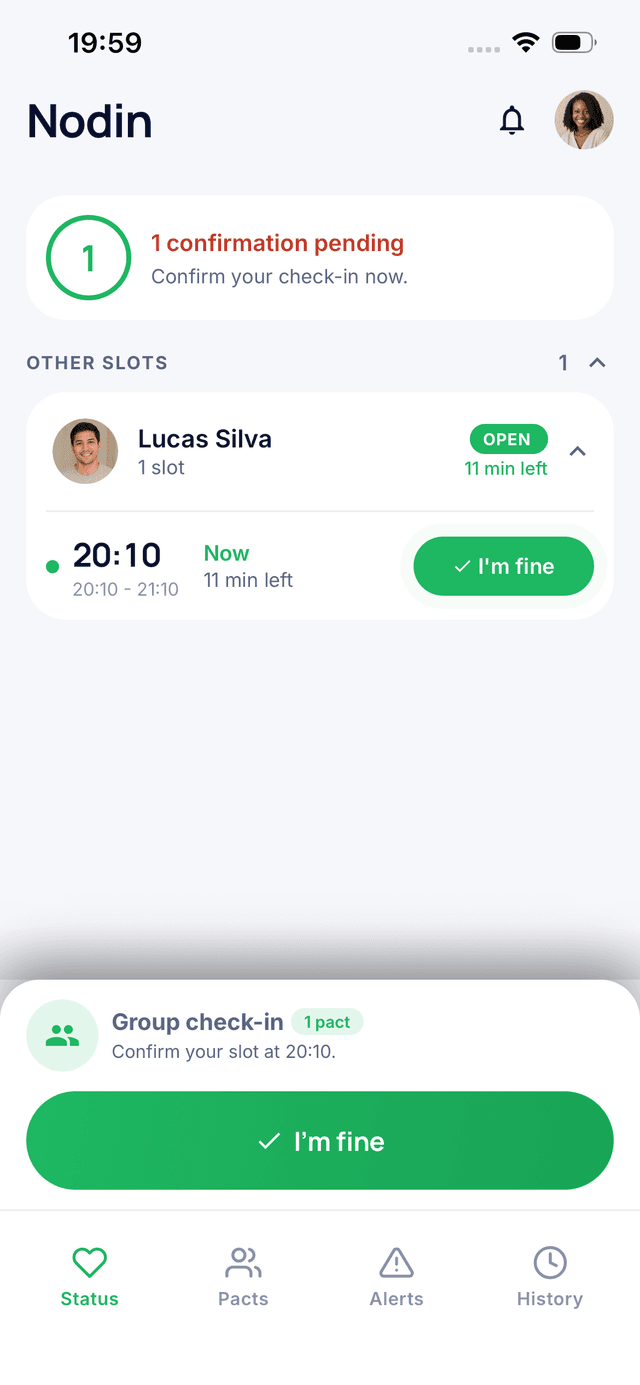
With Nodin, you confirm with one tap each day that you're okay. If you don't within the set window, your loved one gets an alert and can call you or send someone over. Nodin isn't a fall detector or a medical device, it's a human safety net that keeps you from being alone too long.
8 Tips to Prevent Falls
- Clear walkways: cords, slippery rugs, clutter on the floor.
- Light hallways well and use a night-light.
- Put a non-slip mat in the shower and install grab bars if needed.
- Keep everyday items within reach so you don't need a step stool.
- Wear closed, supportive shoes at home.
- Get up slowly from bed or a chair.
- Stay active to maintain strength and balance.
- Have your vision and medications reviewed regularly.
Make a Simple Plan
Who to call, where the spare key is, which numbers to dial: check out our emergency plan for people who live alone.
The Bottom Line
You can't predict a fall, but you can limit its consequences: know the right steps, keep your phone close, make your home safer, and have someone who knows you're okay every day.
Read next
Stay connected with the people who matter
Nodin is a free app that lets two trusted people share a simple sign of life every day. One tap to say you are okay, and if someone goes silent, the other is notified.