

When a loved one lives alone, there are two main types of solutions: medical alert systems (a button or pendant connected to a monitoring center) and daily check-in apps. They don't solve exactly the same problem. Here's an honest comparison to help you choose.
How Medical Alert Systems Work
The person wears a button or pendant. If something happens, they press it and a monitoring center responds, then contacts a family member or emergency services. Some models automatically detect falls.
Pros:
- 24/7 professional response;
- useful after a fall if the person can press the button (or if fall detection works);
- no smartphone required.
Cons:
- monthly subscription fee;
- the button has to be worn at all times, which doesn't always happen;
- if the person can't press it (fainting, loss of consciousness) and there's no fall detection, no alert goes out;
- some older adults feel it's stigmatizing.
How Check-In Apps Work
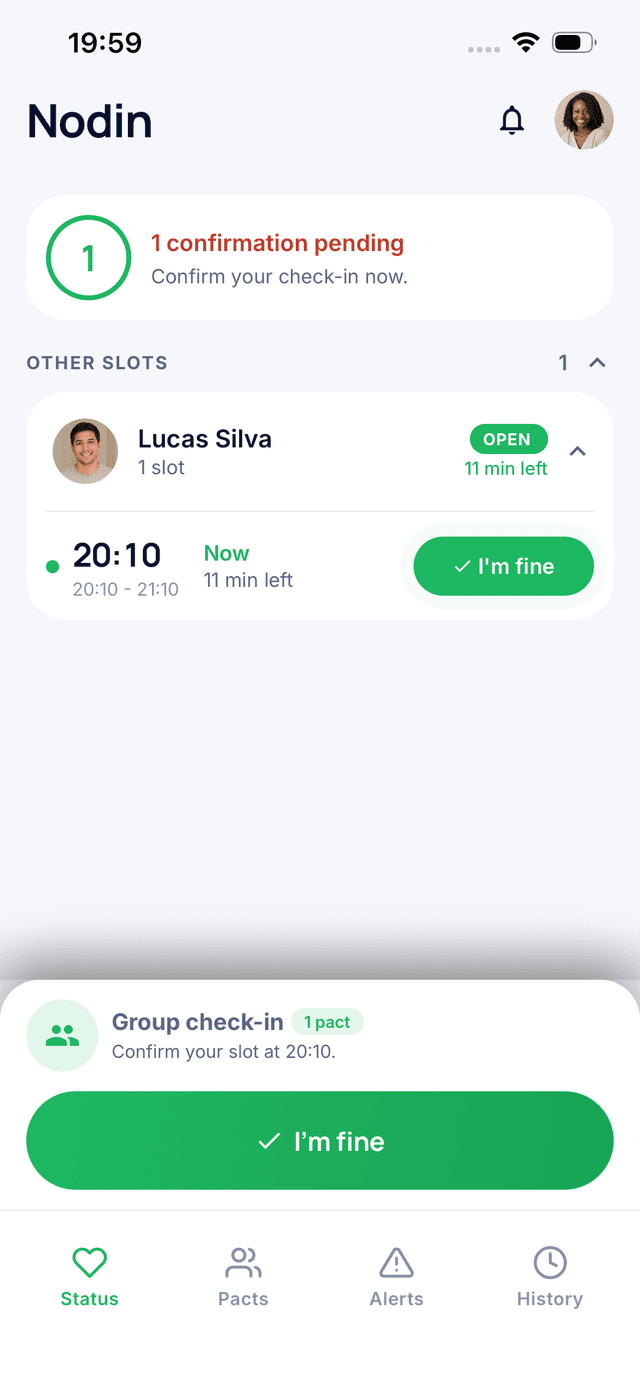
The logic is reversed: instead of calling for help, the person confirms every day that they're okay. If that confirmation doesn't arrive, a loved one is alerted.
Pros:
- works even if the person can't raise the alarm themselves;
- simple and discreet, on a phone they already use;
- creates a daily connection with a loved one;
- often free or low-cost.
Cons:
- no professional response: a loved one is the one who acts;
- detection time depends on the check-in schedule (hours, not minutes);
- requires a smartphone.
Which Solution for Which Person?
- Higher-risk individuals (frequent falls, serious health conditions): a medical alert system, possibly paired with a daily check-in.
- Independent seniors who refuse to wear a pendant: a check-in app is often better accepted.
- Working adults who live alone, students, travelers: a check-in app is a great fit.
- Long-distance families: the app also builds a daily connection.
Why Not Both?
These solutions complement each other. A medical alert system handles emergencies someone can trigger; a daily check-in covers unexpected silence and keeps the bond strong.
The Nodin Approach
Nodin is a mutual daily check-in app. It's not a medical device or a monitored alert service. Every day, two people confirm with one tap that they're okay; if one goes silent, the other is alerted and can act. The emergency screen also lets you call a contact or 911 in one tap.
Read also: What to Do If You Fall and Live Alone and Using Nodin With an Aging Parent.
The Bottom Line
A medical alert system answers “I'm calling for help.” A check-in app answers “no one has heard from them.” Depending on the person, one, the other, or both will bring the right peace of mind.
Stay connected with the people who matter
Nodin is a free app that lets two trusted people share a simple sign of life every day. One tap to say you are okay, and if someone goes silent, the other is notified.